
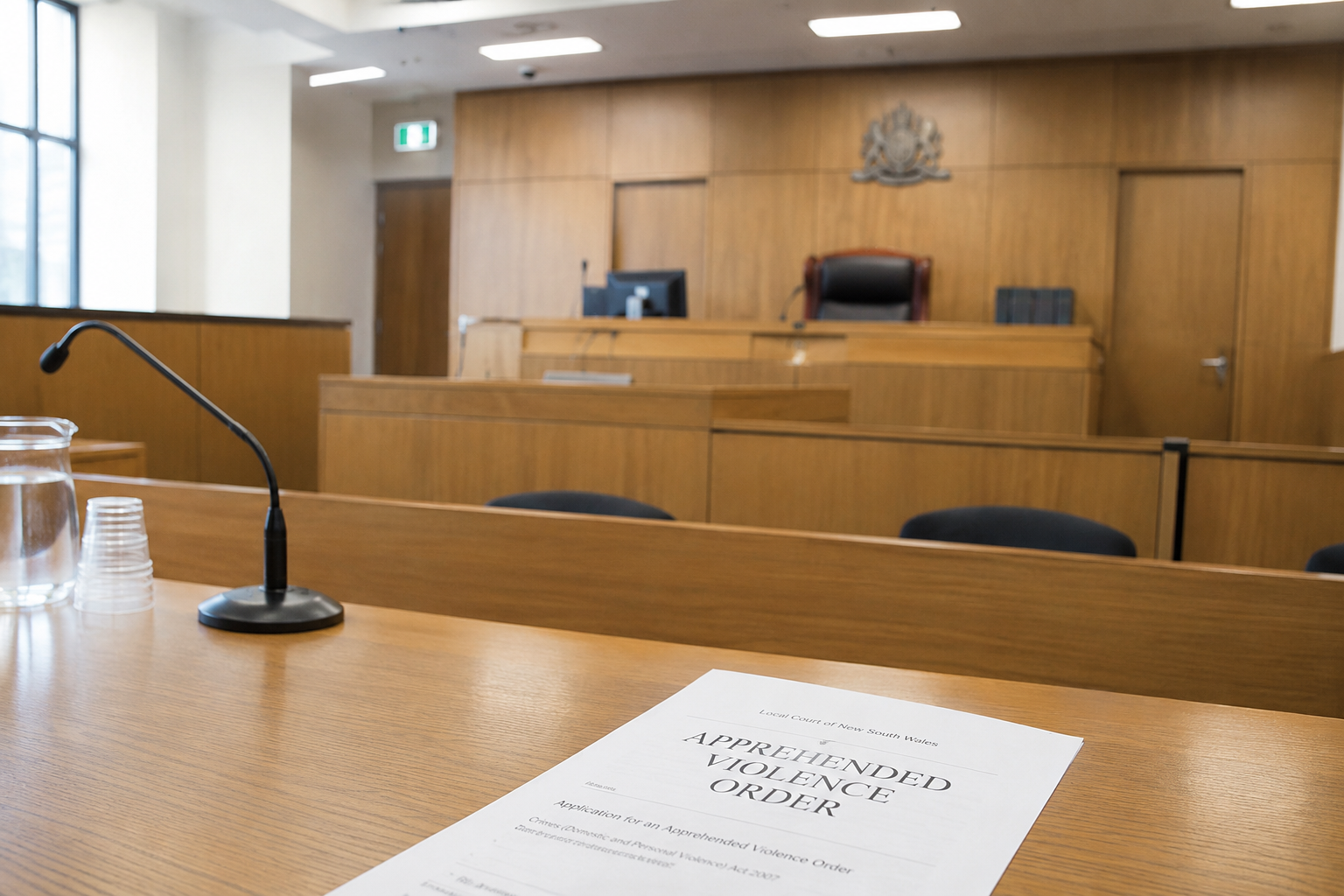
Apprehended Violence Orders
Apprehended Violence Orders (AVOs)
Crimes (Domestic and Personal Violence) Act 2007 (NSW)
What is an Apprehended Violence Order (AVO)?
An Apprehended Violence Order (AVO) is a court order made to protect a person from violence, intimidation, stalking, harassment or damage to property. An AVO is a civil order, meaning it is not a criminal conviction. However, breaching an AVO is a criminal offence and can result in serious penalties.
There are two types of AVOs in New South Wales:
Apprehended Domestic Violence Order (ADVO) – applies where the parties are in a domestic relationship, such as current or former partners, family members or people living together.
Apprehended Personal Violence Order (APVO) – applies where there is no domestic relationship, such as neighbours, friends, acquaintances or work colleagues.
An AVO can include conditions restricting a person’s behaviour, including prohibiting assault, threats, intimidation, harassment, stalking or contacting the protected person.
What Must the Court Be Satisfied Of?
Before making a final AVO, the Court must be satisfied that:
The protected person has reasonable grounds to fear, and in fact fears (unless an exception applies), violence, intimidation or stalking by the defendant; and
It is appropriate in the circumstances for an AVO to be made.
In some cases, such as those involving domestic relationships or children, the Court may make an order even where the protected person does not express fear.
Possible Defences
If you are defending an AVO application, you may be able to argue that:
The alleged conduct did not occur.
There are no reasonable grounds for the order.
The evidence is insufficient to justify an AVO.
The application is frivolous, vexatious or without merit.
The proposed conditions are unnecessary or excessive.
Whether an AVO should be defended will depend on the circumstances of each case and the available evidence.
Possible Outcomes
Depending on the circumstances, the Court may:
Dismiss the application.
Make an Interim AVO.
Make a Final AVO.
Make a Final AVO by consent, with or without admissions.
Vary or revoke an existing AVO in certain circumstances.
If a Final AVO is made, it may remain in force for a specified period determined by the Court. Any breach of the order is a criminal offence that may result in fines, imprisonment or other penalties.